

Currently, there are widespread “folk” military practices in North, West, and East India; each region traditionally considers them to be local and purely native. However, this was not always the case.
These regions, unlike South India, underwent significant social and cultural changes on a regular basis. It is safe to say that they served as a melting pot where different traditions mixed: unviable elements were sifted out, while the most practical and useful aspects remained. Due to these circumstances, it is currently impossible to determine which military practices are of autochthonous Indian origin, which were brought by later invaders, and which arose as a result of the synthesis of different traditions.
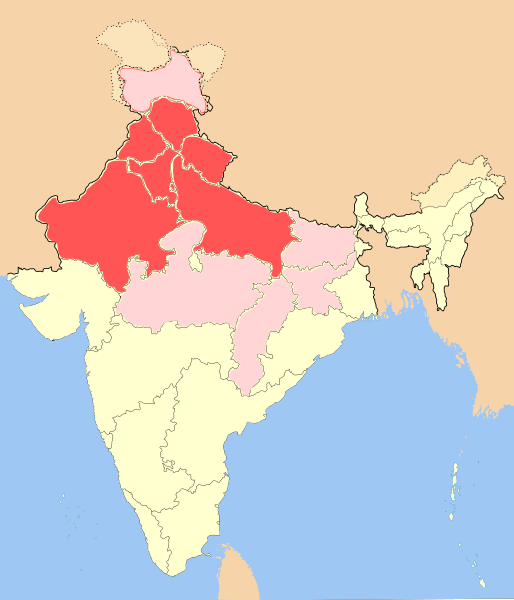
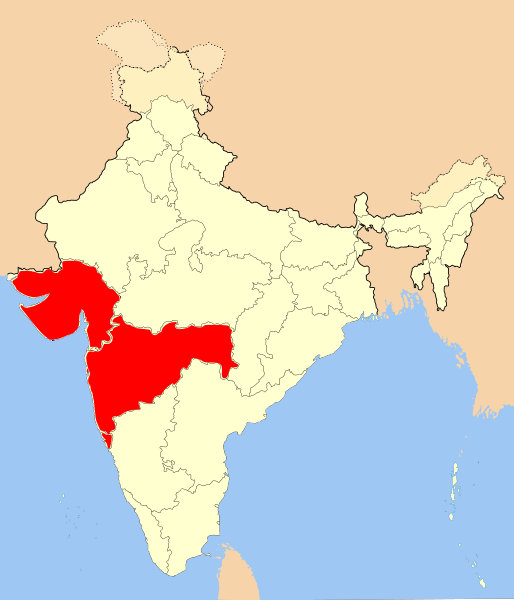
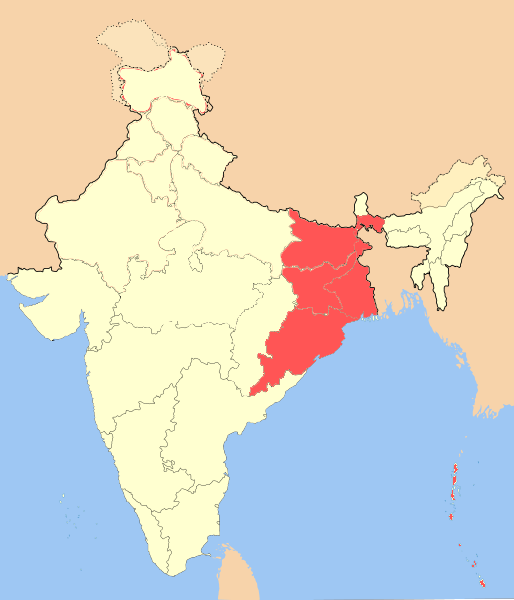
To clarify this issue, it must first be understood that there is no direct connection between modern practices and the ancient martial arts of the Vedic or Classical periods of India. Historically, this connection cannot be traced further back than the Indian Middle Ages. Appeals to classical Sanskrit texts and the Kshatriya caste may be of interest only for the purpose of popularizing historical knowledge of Indian culture in general. The temporal gap and, above all, the significant social and cultural changes that the region underwent over the centuries unlike in South India make it impossible to suggest any continuity.
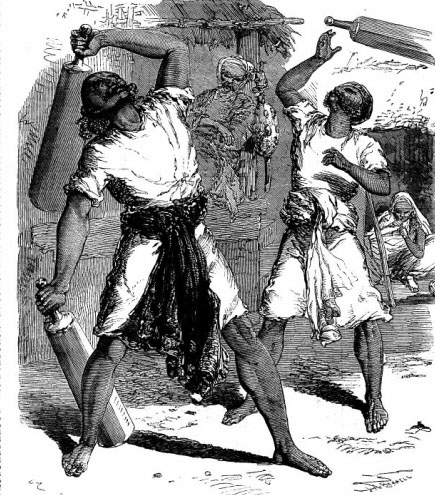
The tendency to divide practices into urban (palace) and rural (communal) traditions has not progressed beyond a few studies, due to the absence of both relevant specialized research and the source materials themselves. The existing unilateralism in descriptions, resulting from the nature of the primary written sources, leads to Indian military practices being portrayed purely as elite practices of the Mughals or Deccan Sultanates. Although there is no doubt that the role and influence of Turkic and Persian cultures should not be underestimated, this viewpoint is just as one-sided as treating these practices as natively Indian and directly connected to the Vedic tradition.
Let us try to address this issue through the lens of these two extreme points of view.
The invasion of India by Turkic peoples coincided with the renaissance of Iranian culture and the spread of the Persian language. Persian cultural influence spread throughout the Muslim world. The conquerors of India were already bearers of Persian culture. In addition to this, Muslims, unlike other conquerors, did not dissolve into the conquered country but instead brought their own state and military organization, way of life, culture, and social relations. The traditionally high mobility of the population of the Indo-Persian region should also be noted. Considering all these factors, by the time of the Mughal invasion, India had already developed all the prerequisites for the perception of Persian culture in all areas of life.
Cultural interaction was neither one-sided nor imperative. The adoption of many elements of Persian culture occurred either through the substitution of similar Indian elements or through compromise, as in the case of the Urdu language, which organically combined Indian dialects with Persian. In the case of autochthonous Indian phenomena that were substituted by introduced Persian ones, the latter gradually came to be perceived as native Indian precisely because of the likeness and even similarity of those phenomena. It is conceivable that in some cases, only the name or term was replaced, due to the dominance of literary Persian and the extant texts.
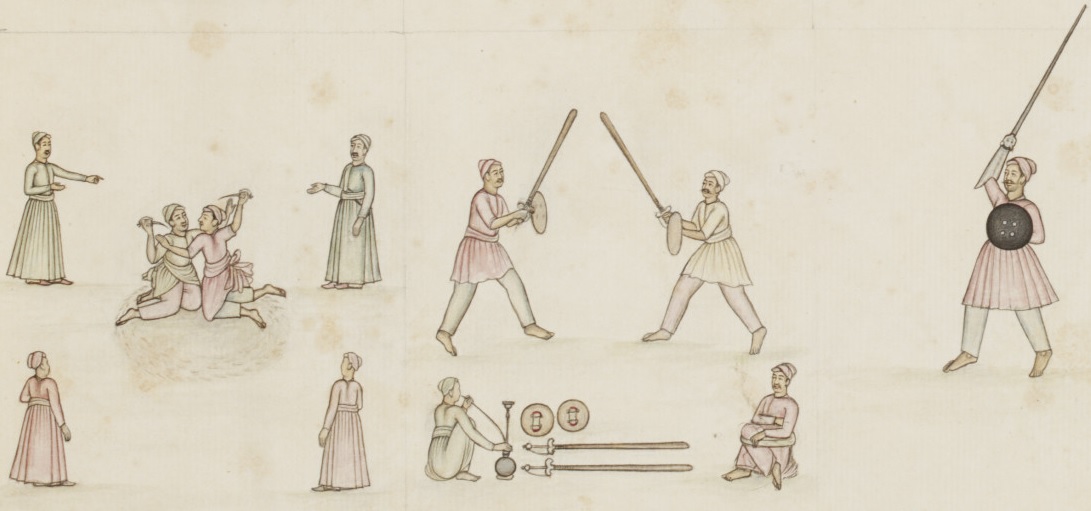
The main branch, and the most well-documented in written sources, consists of practices dating back to the traditions of the Indian aristocracy of Turkic descent. Furthermore, it is important to note that the martial arts patronized by Akbar largely correspond to the practices prevalent in the Muslim Sultanates of the Deccan. The Lucknow library contained numerous texts on archery, fencing with sticks and staffs, swordsmanship, and other disciplines.
Accordingly, it would not be entirely correct to label these practices as purely “Muslim,” as they were certainly influenced by the Indian environment. For example, the treatise on swords, Risalah-e-shamshir shanasi by Nusrat al-Iah Khan, compiled in 1706, contains Indian terminology.
These practices were widespread during the Mughal Empire. This particular tradition was aristocratic in nature, given that the art was studied even by the highest officials of the state, or they directly patronized the best fighters. Jahangir, the fourth ruler of the Mughal dynasty, repeatedly noted in his memoirs his interest in and patronage of leading wrestlers and fencers, from whom he took lessons.
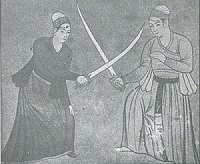
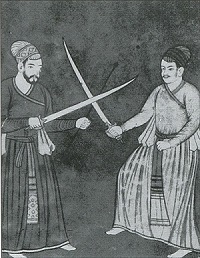
Burhan Nizam Shah I (r. 1510-1553), while still the Prince of the Ahmednagar Sultanate, was personally fascinated by military practices and devoted considerable time to them. Quite naturally, this gave rise to numerous followers and imitators, leading to a situation where every quarter of Ahmadnagar had its own martial arts schools, the number of which equaled, if not exceeded, that of madrasas. Over time, the palace gathered crowds of swordsmen daily to demonstrate their art in jousts. One or two persons were killed per day. For this reason, duels at court were forbidden, and sword masters moved outside the city to determine whose skill was superior. Initially, this practice was recognized as legitimate; murder in a duel was considered honorable and carried no consequences. The next step was brawls and murders in the city streets, arising from ordinary arguments.
This phenomenon spread beyond Ahmadnagar, and duels also became prevalent in aristocratic circles, including among philosophers and theologians. If someone could not stand up for themselves in such a duel, it was viewed as a lack of spirit and courage.

Famous fencers and wrestlers traveled throughout India, offering their services as coaches at the courts. They preferred not to take students from the common classes; their target audience was aristocrats and, above all, their sons, whose upbringing followed the two traditional directions of “pen and sword.” Masters were also involved in military instruction and training. The Mughal army did not pay much attention to the tactical interaction of units on the battlefield, but significant time was devoted to physical training and individual proficiency with various weapons.
Mughal practices can be distinguished both by technical differences and by the prevalence of Persian terminology. In the early Delhi Sultanate period, the Persian term “varzish” (meaning “exercises”) referred to a regimen practiced in the army that included daily exercises, wrestling, and fencing as integral components.

The fact that these practices were a component of formal army military training played an important role. Ultimately, this type of practice became deeply adopted in the soldier environment and, consequently, in the peasant environment. These practices persisted in the colonial troops of the British Army as sports entertainment up until the late 19th century.
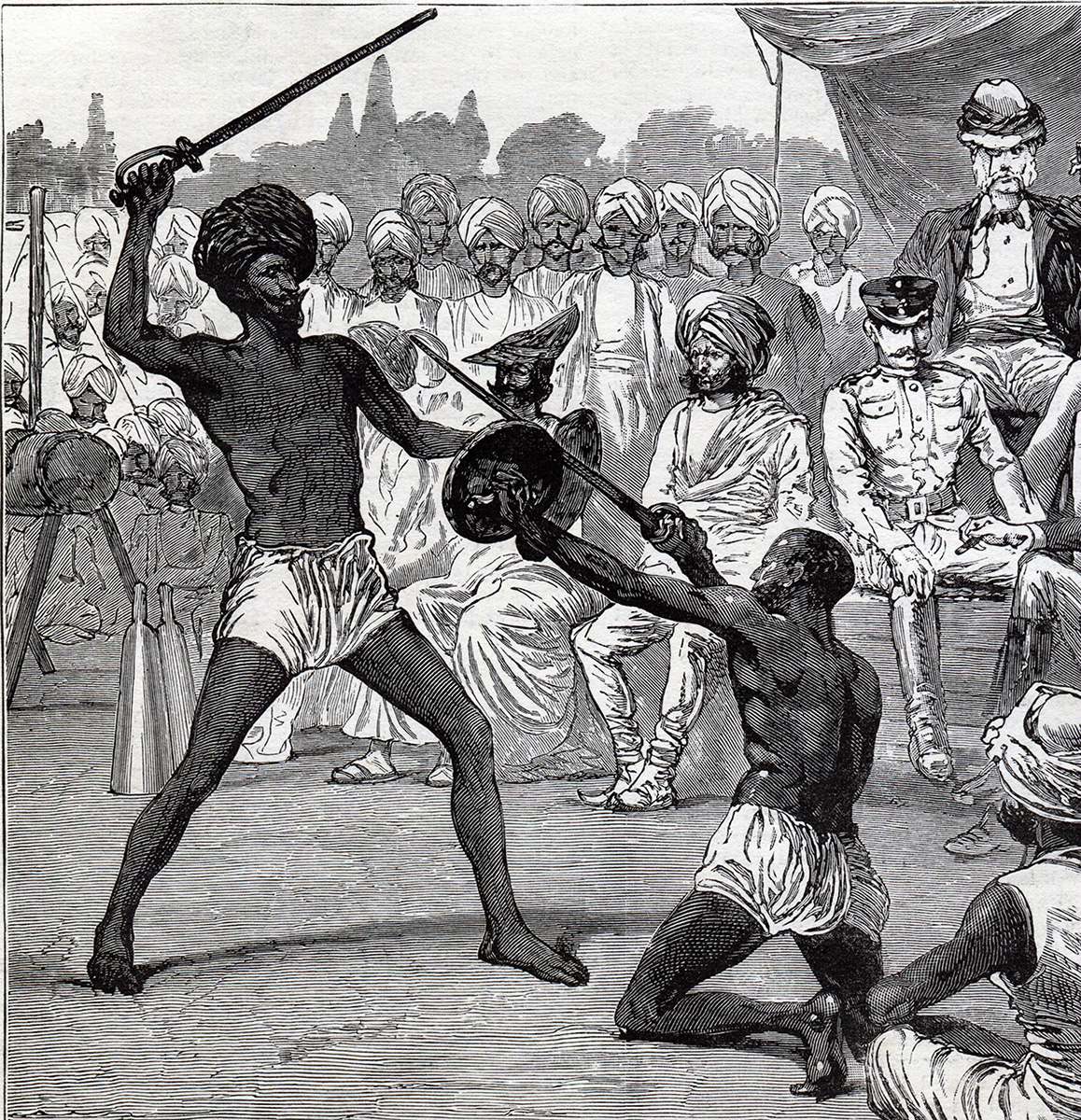
As time went on, combat practices declined as methods of warfare and thus the preparation for it changed. In the military environment, they gradually degraded to the level of sports games, while in the folk environment, where melee skills remained in demand for a long time, they survived in a modified form.
Furthermore, it should be considered that the physical training in the Mughal army was, in turn, necessarily mixed with purely Indian folk practices brought into the army by recruits.

Unfortunately, we currently only know about the sports exercises derived from these practices, largely filtered through the soldier entertainment of the late 19th century, when these practices no longer played a role in the individual training of a warrior. Moreover, the authentic combat practices were actively suppressed by the English administration after the Sepoy Mutiny, and later they were adversely affected by the general decline of interest in national martial traditions. However, at the end of the 19th century, the English officer Robert Stephenson Smyth Baden-Powell observed three schools of fencing in Meerut and gave a high rating to the skills being practiced there.

The second branch of practices, which existed in North, West, and East India, can be separated from the conditionally “Mughal” tradition based on the following features.
First, the skill of the stick or staff was the backbone from which fencing practices derived. This is a surviving part of an all-Indian heritage, which is also traced in practices of Tamil and, perhaps, Dravidian origin.
Second, the basic terminology is Hindi. The most common name for these practices is “kasrat,” meaning “exercise” or “practice” in Hindi. The Indian proverb “kar ba kasrat hai” — “practice makes perfect” — best conveys the meaning of this word. These practices existed in the akhara schools, where ascetics or community militias were traditionally trained.
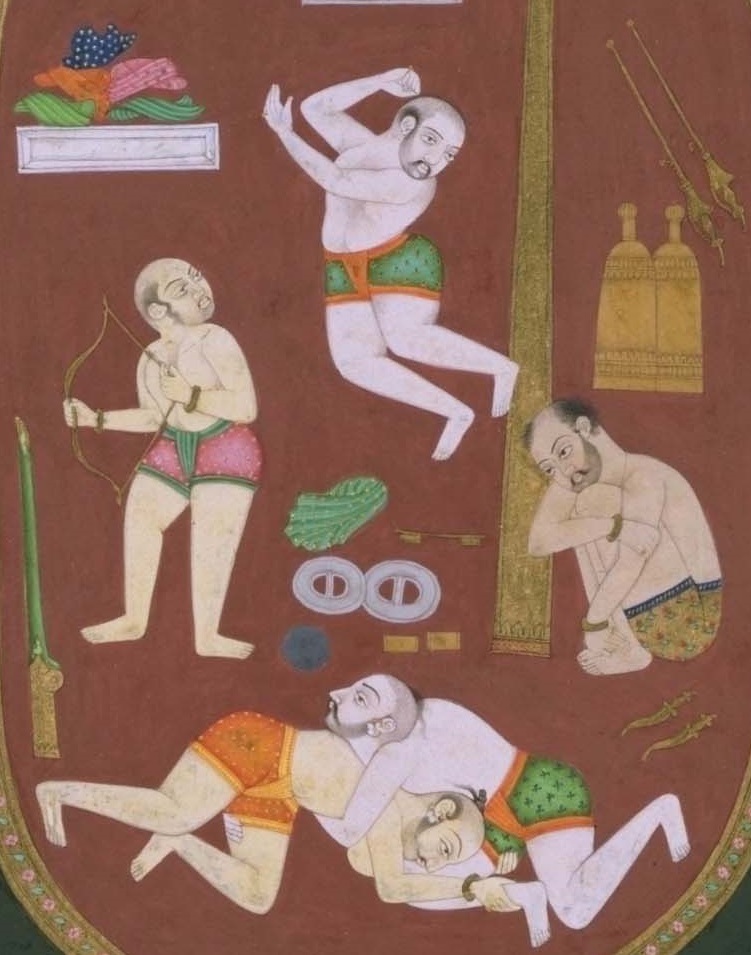
It was the ascetics who practiced their own methods of military training and had centuries of experience in mercenary service, if not armed banditry who preserved these traditional practices until the modern era. It is notable that the Marathas were the first to hire ascetics for military service, but their services as military mercenaries remained in highest demand in Rajasthan until the 20th century. Living alongside the civilian population and combining spiritual practices with military training, they were the creators of these traditions and their bearers.
First, to date, it is impossible to localize it by territorial or ethnic origin. The population of these regions of India was unprecedentedly paramilitary. After the agrarian season ended, or during droughts, peasants derived income from military mercenary service. In terms of individual military training, they were already trained soldiers. Swordplay training and military skills in general began at an early age. Furthermore, among the Rajputs, for example, there were no restrictions for girls and women; almost every village had its own akhara school. According to descriptions from the early 19th century, men of this region rarely left the village without a sword, a shield, a bow and arrows; and if they had a horse, a long spear and a saddle axe were also carried. By the middle of the 19th century, during the Sepoy Mutiny, they worked in the fields with a shield on their backs and a sword at their side. The high degree of paramilitarism common to the region especially among the Rajputs, Jats, Gujarats, and Marathas as well as the high mobility of the population, makes it possible only to state the existence of popular military practices distinct from those of South India or the court (palace) practices of the Mughal or Deccan Sultanates. Second, this branch certainly experienced the influence of practices that existed in the Sultanates of the Deccan, whose main population was Maratha, as well as Mughal and, consequently, Persian influence. This influence encapsulated kushti wrestling (which substituted similar Indian practices) and a number of sepoy soldiers’ exercises. The latter was an inevitable factor, given the mercenary service of the population of these regions in the Mughal, East India Company, and British Indian armies.

Even in the military camps of the Marathas, which, according to some data, played a key role in the spread of the “folk” tradition, some exercises were of Iranian origin.

Another significant factor that makes it difficult to differentiate martial arts styles in the region was the attempt in the 20th century to revive these practices as a unified national physical culture, without any deep analysis or research into their origins. This led to their subsequent existence in this new, merged, and modified form.
Thus, pending new information or rigorous historical research, the actual national military practices in North, West, and East India should be assessed considering the following circumstances:
- probable South Indian origin;
- spread beyond South India along with the Shaivite ascetics;
- adoption of these practices by the Marathas, with the parallel influence of “aristocratic,” partially Iranian practices, during the age of the Deccan Sultanates;
- the expansion of the Marathas, and with them the ascetics, into other regions of India;
- influence of the physical training practiced in the army of the Delhi Sultanate and, later, the Great Mughals;
- physical activities and entertainment of sepoys in the East India Company and the British Indian armies.